Wednesday, 13 July 2011

Café Connect 6 – Friday 8th July, Isle of Mull

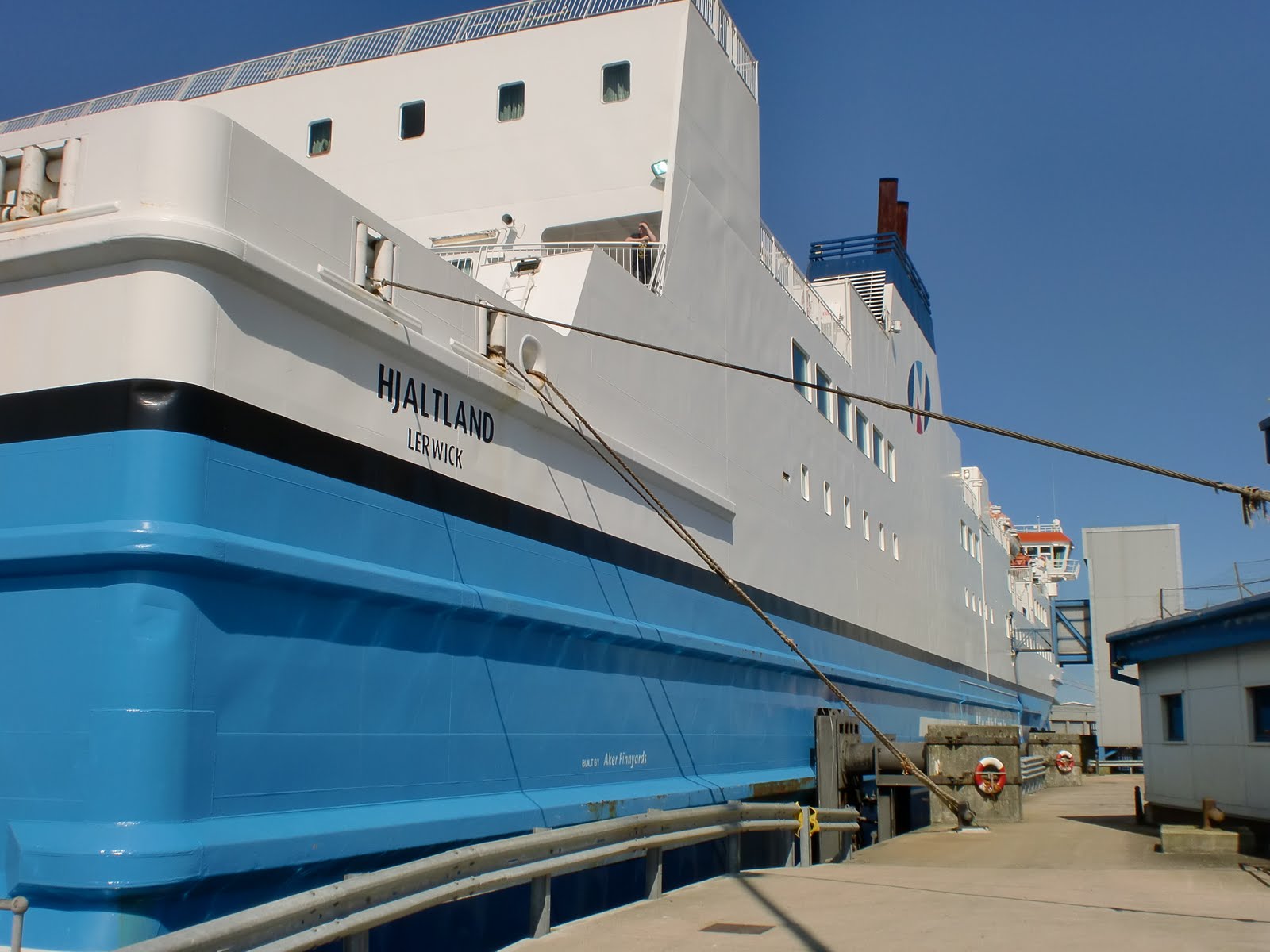
Reluctantly leaving Knoydart I headed south to Lochaline to catch another ferry (who’s counting?) to Fishnish, Isle of Mull…


Last year, the Ulva School Community Association successfully campaigned to save the community’s only remaining communal asset – Ulva Primary School.


The school pupils totalled 4 last year, this year its 8. The numbers temporarily swelled when it became our next, and undoubtedly the most colourful, Café Connect venue for the night…


…with 18 people attending! Note that the USCA area of Mull has a population of just 110.


The Ulva champion, Carolyne Charrington (Vice Convenor, Ulva School Community Association) originally approached us to host a Café Connect and laid all the groundwork. With Carolyne unable to make it on the night, she passed the baton to Helen Mackay (Convenor, Ulva School Community Association). Helen did a fantastic job in spreading the word, going all out to make the night a success; she made dedicated phone calls to households in the community, stopped people in the street, posted the flyers and even bagged a slot on Oban FM!


Tonight’s speaker was Dr Alasdair Mort (dot.rural Healthcare Research Fellow, Centre for Rural Health, University of Aberdeen) delivering ‘Rural Pain Relief: A digital dose’. The talk linked in with our TOPS (Technology to support Older adults Personal and Social interaction) Healthcare project, and touched on areas such as rural well-being, comfort and friendship.

Alasdair focused on the issues surrounding the ageing populations of rural areas, the management of chronic conditions and that of associated chronic pain (defined as lasting for more than 3 months). It is projected that in 2030, 32% of people will be over 65 years old in the Argyll and Bute area (exceeding the UK average) and thus impacting the challenges of living with a chronic condition.

Alasdair went on to describe that current state of telehealth, telecare and telemedicine, with the possible reduction in face-to-face personal and social interaction.

A quick break, and just time to sample the fantastic rock cakes and the lemoniest lemon drizzle I’ve ever eaten…


From a sample of cake, to a sample of the discussions that emerged…
- Technologies, like those being developed under the TOPS project, “can’t bring people physically closer, but may make them better connected”.
- Concerns over new technologies diverting funding from other medical service provision, culminating in the loss of care.
- Concerns over the rising costs of fuel when making journeys to/from disperse communities for essential, medical reasons.
- The importance of options: if people choose to use technology to support their levels of personal and social interaction in the management of their chronic pain, then this should be available but is not intended to replace any face-to-face interaction currently available.
- The Scottish Government completed an initiative about 10 years ago, delivering computing hardware (a computer, printer and webcam), free Internet access for 1 year (later extended to 3 years), and dedicated training workshops to every household in the area.
- ‘A digital dose’ is really referring to “methods of communication, not pain relief itself”.
- The real demand for remote consultations and diagnoses (supported by new technologies), and promising invaluable reassurance in real-time. This local need links in with another of our Healthcare projects (phase 2) .
- The value in digital pain diaries with a very simple GUI (perhaps on a telephone).

After rescuing the Primary School, the USCA are invigorated, using the school, in place of a village hall, to the max for all sorts of events and workshops.

If you fancy sampling some of their genuine community ‘togetherness’, pop along to the USCA Summer Fete on August 7th. But a word of warning – once there, you might not want to leave!


The evening concluded with a bizarre experience in the Craignure Inn; a ‘push the bottle’ competition which Mat and Alasdair narrowly lost to the locals…


Claire

p.s. Did you catch our previous blog post (Café Connect 5 – Knoydart) on the front page of the Ruralworkspace Daily?

Tuesday, 12 July 2011

Café Connect 5 – Thursday 7th July, Knoydart

We made our way from Oban to Mallaig en-route to the next stop, Knoydart. Meanwhile, the Stornoway black pudding safely on its way back to Aberdeen, accompanied by Ruth, to be refrigerated.

The Lonely Planet describes Knoydart as “the only sizable area in Britain that remains inaccessible to the motor car… No road penetrates this wilderness of rugged hills – Inverie, its sole village can only be reached by [Bruce’s!] ferry from Mallaig, or on foot (a tough 16-mile hike)” so I wasn’t quite sure what to expect.


There’s no denying it; Inverie, Knoydart is a fantastic place. I almost don’t want to tell you about it because I’m definitely coming back. Its the remoteness and the friendly locals that make it so special.


To top it off, we stayed at the Gathering, a superb B&B ‘with a difference’… and with Internet connection to rival Aberdeen City, despite the (almost) non-existent mobile phone coverage.

The Knoydart Café Connect champion, Davie Newton (Local Development Officer, Knoydart Foundation) had done a superb job beforehand spreading the word across the peninsula, and beyond with attendees making a dedicated overnight trip from across the water on the Isle of Eigg!


Prof Claire Wallace (dot.rural Enterprise & Culture theme Lead and newly appointed Co-Vice Principal of Research and Knowledge Exchange, University of Aberdeen) was there to deliver her talk, entitled ‘Rural Futures: people + business + technology = sustainability’, to a strong turnout of 13 (population just 120 people). This meant the wonderful Knoydart Tearoom and Pottery was almost at full capacity!


Claire set the scene with an overview of our Enterprise & Culture projects: SIRA, CURIOS and ASSURE. CURIOS, and a possible extension to it – a whole new dot.rural project! – became the main focus of the 90-minute discussion that followed.


A sample of some of the discussions…
- Economic and copyright queries over ‘ownership’ of people’s memories.
- Demand to extend projects like CURIOS, beyond a family history recording tool of ‘who married who’, linking into a bigger historical (and possibly an agricultural and land use) context… “Not just for community history, but for community futures”.
- Questions over the quality of information, and the filtering of what’s input into such databases, drawing parallels with the unmoderated world of Wikipedia.
- How does the technology behind such databases distinguish between, say, 100 people of the same name?
- The real need to search within, and also between, community databases and records, with a possible temporal element incorporated into the interface.
- A need to map community initiatives and infrastructure schemes (sewerage, electricity, broadband etc) to facilitate full-scale knowledge sharing across the UK, and in Europe.

The ‘quote of the evening’ has to go to Alex Boden for “we want to turn our resources into cash”, demonstrating the need for a new, effective community business model, in a broader sense…
- There are only 3 indigenous people currently left on Eigg.
- The period of 1900-1970 local history is rapidly disappearing. There’s a desperate need to "capture this before it disappears".
- How can technology deliver new ways of creating a sustainable economy, particularly outside of the (limited) tourist season?
- Similarities with technologies being developed for walking tours on Eigg, with those presented at the Digital Futures 2011 conference and off-the-shelf applications.
- Concerns over tech-supported walking guides reducing the social contact between locals and tourists, with a potentially negative impact.
- The Hebrides.net project delivering ~6 MB broadband to 40 subscribers on Eigg for ~£15 per month (with a BT backhaul). This will be delivering connectivity to the Isle of Muck next week (July 2011). How does this compare to the current provision in Knoydart? £43 per month for 1 MB.
- Practical issues experienced with LEADER project and funding applications.

Afterwards, it was great to chat with Isla and Rhona (Knoydart Tearoom and Pottery) about life in Knoydart, the role of Facebook in the community and its impact on their business… and the infamous New Year democratic discos!

Thanks to Isla and Rhona for opening up late, experimenting with this new format and for putting on a special ‘Café Connect menu’, and big thanks to Davie.


With the obvious successes of Ravenspoint and Knoydart under our belt, we’re now at the halfway point: 5 down, 5 to go.

Claire

Monday, 11 July 2011

Café Connect 4 – Wednesday 6th July, Isle of Barra

Leaving the peat bogs of Lewis behind, I headed south via the stunning beaches of Harris, to catch the first of three ferries for the day (Leverburgh - Bernerary) with no contingency built into the schedule…


…and then through North and South Uist to catch the second ferry (Eriskay –Ardmhor, Barra). When checking-in at Eriskay I noticed a local flyer advertising the ‘Mobile Chippy Bus’. Genius.


Once on, I spotted some 'Flexible Integrated Transport Services' in action! The Grillburger van man was distributing his deliveries to other (non-food business) drivers on the ferry, for wider circulation afterwards.


On the ferry some eager passengers pointed out basking sharks – with the Captain halting the ferry mid-crossing, allowing them to pass – and later, a group of seals.


Once on Barra, and with minutes to spare, there was no time to hop over to Kisimul Castle…


… before locating the elusive ‘Youth Café’ hidden within the Community Hall and the not-so-elusive speaker, Ruth Wilson (dot.rural Enterprise & Culture Postgraduate Researcher).


The champion, Murdo, eventually located the keys to the Hall and Café Connect number 4 got underway.

Unfortunately Ruth delivered her talk, entitled ‘Facebook and the Fate of Barra: The digital evolution of social life on a small island’, to one of our smaller audiences – in the rural locations we’re reminded that it really is all about quality not quantity – but stimulated, undoubtedly, the most interactive and in-depth discussion to follow a talk.

Perhaps it was the earlier start time (all other Café Connects commenced at 7 pm, unrestricted by the ferry timetables), or that such an initiative is new to Castlebay, or the fact that the social media networks weren’t fully utilised locally (i.e. the Siar FM Facebook page) beforehand...

With fantastic input from two members of the audience, Jane and Peter, the following points were raised during the 90-minute discussion:
- The impact of the Internet in the media, e.g. the Pope’s first Tweet.
- “Whatever wonderful things the Internet might bring, a hug is not one of them.
- Isolation, community and well being all supported (or not) through social media platforms such as Facebook.
- The different uses of social media in remote and rural areas, compared with towns and cities, and its affect in weakening/strengthening community.
- Parallels with the introduction of previous communication methods (such as the telegram, the telephone…) receiving similar receptions.
- The blurring of social lives; where does one end (‘real’ friendship) and the other (online relationships) being?
- Examples of local uses of Facebook included playing scrabble with relatives living in other places, and connecting with other, similar businesses (in this case a network of proofreaders).
- Those living on Barra not really considering themselves as ‘remote’.

It was also great to learn that Barra boasts an avid group of ‘Bumble Bee counters’ (something which may be of particular relevance to Dr Rene van der Wal and our Bumble Bee, Natural Resource Conservation project) and the suggestion to explore potential collaborations with the Co-operative.

From these discussions with real end users, there’s no doubt that Ruth’s research has been actively shaped.

It already appears that the audience turnout is directly dependent on the efforts of the community champions, and is inversely linked to the local population size; the fewer people in the community, the stronger the community networks and thus, the greater the demand and demonstrable support for such initiatives. After today’s Café Connect, it also seems that a smaller audience fosters more engaging, and multi-way, discussions.

So, what next? Another ferry! We boarded the Castlebay-Oban ferry and once we’d set sail, we were closely tailed by a group of playful dolphins.

How much can you squeeze into one day? 226 miles, three ferries and a Café Connect.

Claire

Thursday, 7 July 2011

Café Connect 3 – Tuesday 5th July, Isle of Lewis

Tuesday kicked off with an early-morning drive from Bonar Bridge to Ullapool in time for the ferry to Stornoway and to meet up with tonight’s speaker, Dr David Corsar (dot.rural Computing Science Research Fellow).


Once in the Outer Hebrides (for the first time!) we popped in to the famous Charles MacLeod butchers for a Stornoway black pudding (or 3!)…


…ticked off another stone circle at Callanish and went into the blackhouse at Arnol… and came out smelling like a kipper!


Thought for the day: Forget me, more importantly, how long can a black pudding survive on the road?!

The Ravenspoint Café Connect community champion – John Randall (Chairman, Co-Chomunn na Pairc, the Pairc Community Co-operative) – cleverly tied in our talk date with the launch of the brand-new extension to the Ravenspoint Community Café.


The café, funded by Big Lottery Fund, HIE and CnES, is the latest addition to the Co-Chomunn na Pairc community enterprise. Locals and tourists can also find the Ravenspoint community shop, museum, archive and hostel on site.


The community turned out in full force, supporting John, the new café extension and the Café Connect pilot. During the speeches and obligatory ceremonial ribbon-cutting…


…the supporters were literally queuing out of every doorway.


David delivered his talk on ‘Driving Rural Transport: Mainland technologies for a small island?’ to a 24-strong audience!

David introduced the two dot.rural Accessibility & Mobilities projects, FITS and IRP, proposing that the Q&A session that followed be used to discuss the demand for, and applicability of, such initiatives within the context of island communities.


Tonight’s Café Connect turned out to be our most successful one yet. The audience was sizable – given these are all taking place in remote and/or rural communities – and demographically varied. Attendees included Donnie Morrison (Director of Co-Chomunn na Pairc, the Pairc Community Co-operative and HIE employee), Helen (Community Development Officer) and Malcolm Burr (Chief Executive of the Western Isles Council).

The Q&A session prompted lively discussion and lots of comments for me to feedback to the dot.rural researchers, potentially shaping the research. The venue (and the views!) was superb and there was a real sense of occasion.

A summary of the discussions…
- Reassessing the community bus use (expertly spotted beforehand by David, parked outside) which is currently estimated to be in use ~<5% of the time!
- Utilising the current hospital transport provision to maximum effect
- Concerns over the cost of fuel and the socio-economic impact on rural transport services
- The idea of having one ‘shared’ car per village, or even investigating what the optimal number of shared cars per village would be.
- The tensions of cheapened transport provision vs rural development and the potential (negative) socio-economic impact, e.g. free/subsidised transport to supermarkets in larger villages and towns reducing spend in community shops
- Looking into the introduction of ‘driver incentives’ (“driver is key”) when relying on goodwill is not sustainable.
- An idea of the timescales involved when tailoring such systems to each individual community.
- Issues over the legalities and ethics associated with FITS-type schemes and wider concerns for the ‘disengaged’, those who are not computer literate or who chose not to be digitally involved.

One member of the audience, who may turn up at Lizzy Tait’s ‘Power of Social Media’ Café Connect in Drumnadrochit on Monday 11th July, recorded the audio of David’s talk…

I managed to get online briefly (if I lived in the Outer Hebrides I don’t think I could ‘live’ without an iPhone) and finally tweet.

Unwinding over a couple of bottles of Celtic Black Ale back at the spotless Loch Erisort Inn, I knew that, if nothing else, the Café Connect principle has been proven tonight through this success at Ravenspoint.

Over the Café Connect series, I’m becoming more and more convinced that the success of such a pilot, and any follow-on initiatives, hinges on the champion; their place within the local community, the connections they have and their efforts invested in promoting the event locally beforehand. John has been an absolute star.

I’ll definitely be back. If not to stay in the Ravenspoint Hostel and (re!)sample the fantastic cupcakes, then to catch-up with John.

What’s the most impressive part of the evening? Being privileged enough to see such a focused and community-spirited group of people working together towards common goals.

Sadly there’s no time to see the looms weaving Harris Tweed with this gruelling schedule. Tomorrow, three ferries, a Café Connect in Castlebay and a 5.30 am start to check out the Harris beaches all lie in store. Yawn.

Claire

Café Connect 2 – Monday 4th July, Bonar Bridge

Arriving in Scrabster I thought it was only right to ‘tick off’ the most northerly point on mainland UK; John O’ Groats.


Not only is John O’Groats the most depressing and toot-tastic place in Scotland, it turns out its not even the most northerly point. In both the natural beauty and the northerly claim-to-fame stakes, Dunnet Head wins.


Dr Arjuna Sathiaseelan (dot.rural Communications Engineering Research Fellow) led the second Café Connect talk on ‘Pervasive Internet: Rural reality or pipe dream?’ at the Bonar Bridge Community Hall, with free tea and biscuits laid on.


Arjuna’s engaging talk spanned the complete evolution of the Internet as we currently know it; the difference between the internet and the Internet; and what the online future promises.

He also suggested that satellite technologies, although often seen as a last resort for fast, next generation connection, may actually be an appropriate option for remote and/or rural communities (linking into the dot.rural SIRA, DART and ASSURE Enterprise and Culture projects).


The lively debate that followed included…
- Issues associated with satellite broadband: What happens if a sea gull lands on your satellite dish? Will a satellite Internet connection still hold out during heavy snowfall?
- Real concerns regarding the affordability of satellite broadband for an area like Sutherland with lower than average salaries: An introductory price of ~£30/month was deemed too high, even for a converged (e.g. TV, radio, telephone and broadband) service.
- With Sutherland being the “least populated area in Europe” (~1 person/2.2 square miles) what alternative broadband technologies are feasible for local communities?
- The frustration experienced with current download speeds and concerns over any potential impact on feelings of isolation associated with a change to the current broadband provision.

John McMurray (Community Outreach Worker, Bridge Project, Dornoch Firth Group) attended the talk and, as a result, is particularly keen to liaise with our dot.rural Co-Investigators leading the SIRA project (Prof Claire Wallace and Prof Gorry Fairhurst) exploring potential community case study opportunities. John also mentioned similar community initiatives such as Cybermoor and Wray (both well known to dot.rural) and the Renfrewshire Council of Voluntary Services’ broadband project (previously off dot.rural’s radar!).

Quote from an audience member: “Its not the technology that matters, it’s the way people use it.”

Claire

Café Connect 1 – Sunday 3rd July, Kirkwall

Dr Rene van der Wal (Reader at the University of Aberdeen and dot.rural’s Natural Resource Conservation theme Lead) kicked off the Café Connect pilot series in the awe-inspiring setting of St. Magnus Cathedral, Orkney with his talk entitled ‘Birds, Bees and Digital Conservation’.

I (obviously!) know Rene’s an ecologist but, still, his passion for birds really struck me on the ferry from Aberdeen; while everyone else was (unsuccessfully) battling with the inevitable seasickness, Rene set up camp at the stern, bird spotting armed with binoculars and his ears acutely tuned to squawks.


Before the talk, I squeezed in a quick visit to the Tomb of the Eagles and the Neolithic village of Skara Brae, shamelessly spreading the word en-route!


A slight ‘teething problem’ [no banner stand pole] meant we resorted to tying the dot.rural banner stand… to the pulpit!


Despite the cheesy sound bites on BBC Radio Orkney beforehand, the turn out was lower than expected; perhaps due to the distracting sunshine that day, or maybe the fact that one-off pilot initiatives, by definition, haven’t yet built up a known and engaging brand within the local area…

Nevertheless, Rene’s talk was superb – asking whether digital innovation can inspire, or even re-connect people to our natural environment – detailing the dot.rural NRC projects on red kites and bees, complete with an interactive ‘identify the bumble bee’ exercise (c.f. the dot.rural bee project).

The audience included representatives from the Orkney Field Club (Penny) and the RSPB (Kenneth) volunteers. Hence, when combined with the talk topics, the Q&A session ventured into discussion of: OrkBird, a well-established, local bird identifying and audio/visual recording community database, similar to iSpot; the potential sociological impact(s) of crowd-sourcing methods; the challenges associated with working within such an interdisciplinary research group; and the importance of such community initiatives in maximising the involvement of people in the different layers of natural conservation. There was also lots of discussion of how the school communities and voluntary organisations of Orkney can get involved with the red kite story-telling and the bumble bee recording projects, respectively.

The night ended with a fascinating impromptu cathedral tour from Fran with her excellent and very animated storytelling, revealing the hiding (and final resting) place of St Magnus’ remains – hint, look for the marked stone in the south-east pillar – and bringing the legends to life.

As the sun was setting we headed to the standing Stones of Stenness…


…and the Ring of Brodgar where Rene suggested I eat (yes eat!) some Bell Heather…


…before preparing for an early (5.00 am!!!) check-in for the Stromness-Scrabster ferry on Day 2.


Claire

Thursday, 9 June 2011

Enterprisers

Enthusiasm,
Networking,
Teamwork,
Energy,
Relax,
Passion,
Regeneration,
Inspiration,
Satisfaction,
Engagement,
Reflection,
Sparkle
....and more and more....
...what's that? It's only a little part of what you can get from Enterprisers.

What's Enterprisers? It is a programme run by the University of Cambridge.
It is all about developing entrepreneurial skills, from creativity and marketing to communication. However, there are loads of other exciting things that one can learn and practice. More information can be found in Enterprisers.

This course is perfect for people interested to start a business but anyway this should not stop others to participate because the skills that you learn and practice are useful for all types of jobs.

Anyway after attending the workshop last week in Cambridge I can tell you that this is not only about skills, it's a change of life...
I will not describe what activities we have been doing because otherwise I will ruin the surprise effect but I can tell you that you will find yourself doing all sorts of activities, playing, acting, dancing, singing, eating, thinking, presenting without even realizing it.
And I'm sure there is something useful and funny to bring home for everyone.

...It's been a week and I feel like it happened only in my dreams... such amazing people, an incredible team "Green Stars", interesting entrepreneurs with different stories, a great group of facilitators and the two most amazing mentors we could have ever had...

The workshop is a really intense 4 days journey but at the end you feel like you have been away for months. It started with a deep work on ourselves, our objectives and motivations and by the second day I had forgotten all the dark days of my PhD :) :)

The best point is that I didn't realise how much I learnt in such a short period of training. Although the usual training courses are interesting I found most of them a bit "boring" ....but this one is just so dynamic and funny and extra-creative and.... just great! And I was so lucky to be in the Green Stars team, they were extraordinary and we have been working very well together... And here is our amazing GREEN ROCKET ready for the moon!!!... keep dreaming!!


It's been a very refreshing experience, it's good to change environment and meet such great people, it's been an explosion of positive energy and enthusiasm. When you are overwhelmed with many things to do it's likely that you forget the motivation that inspired your choices in the first place... Well this course has helped me to rediscovered the motivations for which I started my PhD....


A big thanks goes to the Green Stars which have made my experience just Amazing!!!


And here some pictures of our work in progress... (Giant Jenga and Brainstorming)


...And the launch to the Moon.....with Parachute....


Alice