Thursday, 7 July 2011

Café Connect 2 – Monday 4th July, Bonar Bridge

Arriving in Scrabster I thought it was only right to ‘tick off’ the most northerly point on mainland UK; John O’ Groats.


Not only is John O’Groats the most depressing and toot-tastic place in Scotland, it turns out its not even the most northerly point. In both the natural beauty and the northerly claim-to-fame stakes, Dunnet Head wins.


Dr Arjuna Sathiaseelan (dot.rural Communications Engineering Research Fellow) led the second Café Connect talk on ‘Pervasive Internet: Rural reality or pipe dream?’ at the Bonar Bridge Community Hall, with free tea and biscuits laid on.


Arjuna’s engaging talk spanned the complete evolution of the Internet as we currently know it; the difference between the internet and the Internet; and what the online future promises.

He also suggested that satellite technologies, although often seen as a last resort for fast, next generation connection, may actually be an appropriate option for remote and/or rural communities (linking into the dot.rural SIRA, DART and ASSURE Enterprise and Culture projects).


The lively debate that followed included…
- Issues associated with satellite broadband: What happens if a sea gull lands on your satellite dish? Will a satellite Internet connection still hold out during heavy snowfall?
- Real concerns regarding the affordability of satellite broadband for an area like Sutherland with lower than average salaries: An introductory price of ~£30/month was deemed too high, even for a converged (e.g. TV, radio, telephone and broadband) service.
- With Sutherland being the “least populated area in Europe” (~1 person/2.2 square miles) what alternative broadband technologies are feasible for local communities?
- The frustration experienced with current download speeds and concerns over any potential impact on feelings of isolation associated with a change to the current broadband provision.

John McMurray (Community Outreach Worker, Bridge Project, Dornoch Firth Group) attended the talk and, as a result, is particularly keen to liaise with our dot.rural Co-Investigators leading the SIRA project (Prof Claire Wallace and Prof Gorry Fairhurst) exploring potential community case study opportunities. John also mentioned similar community initiatives such as Cybermoor and Wray (both well known to dot.rural) and the Renfrewshire Council of Voluntary Services’ broadband project (previously off dot.rural’s radar!).

Quote from an audience member: “Its not the technology that matters, it’s the way people use it.”

Claire

Café Connect 1 – Sunday 3rd July, Kirkwall

Dr Rene van der Wal (Reader at the University of Aberdeen and dot.rural’s Natural Resource Conservation theme Lead) kicked off the Café Connect pilot series in the awe-inspiring setting of St. Magnus Cathedral, Orkney with his talk entitled ‘Birds, Bees and Digital Conservation’.

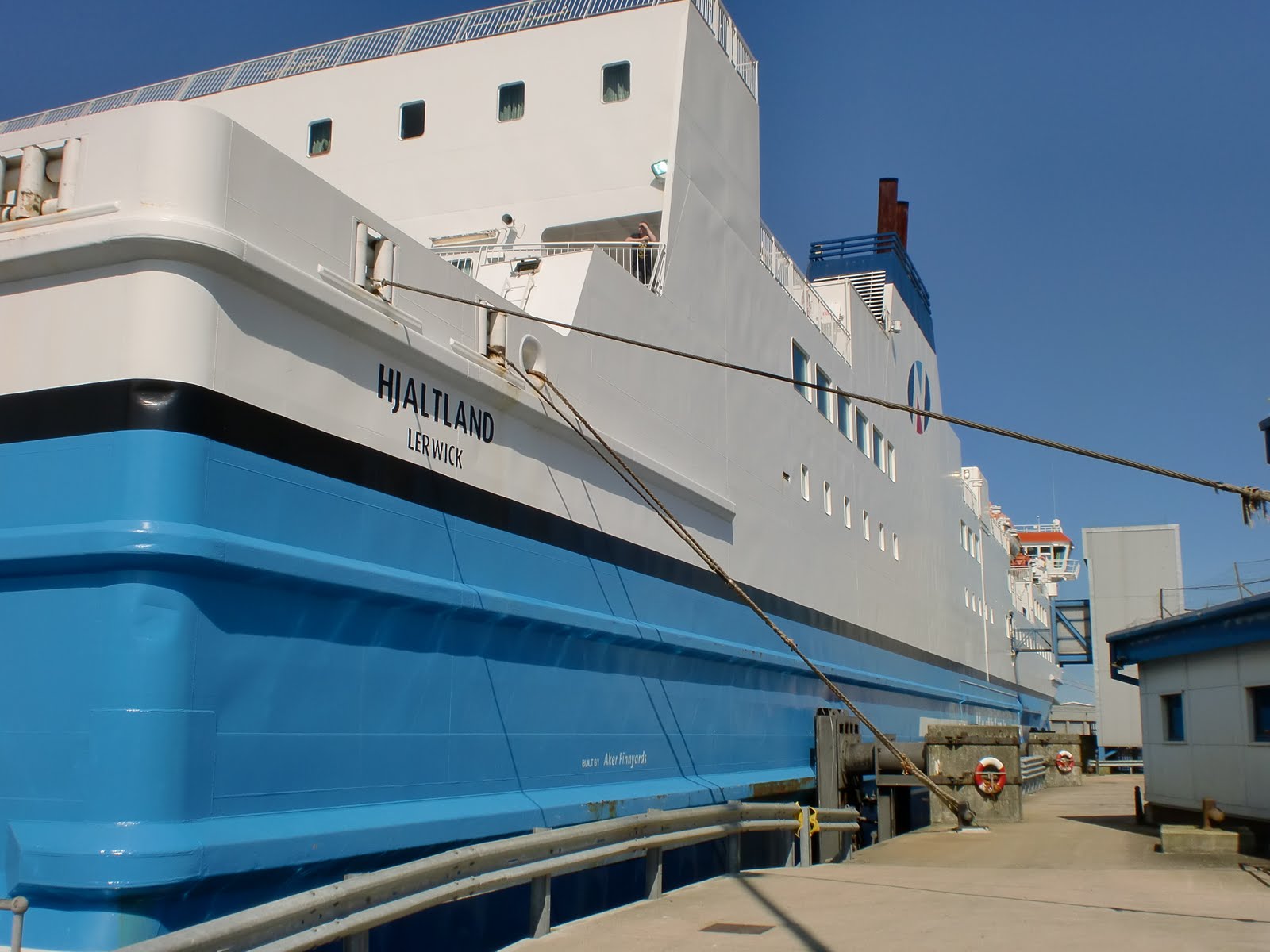
I (obviously!) know Rene’s an ecologist but, still, his passion for birds really struck me on the ferry from Aberdeen; while everyone else was (unsuccessfully) battling with the inevitable seasickness, Rene set up camp at the stern, bird spotting armed with binoculars and his ears acutely tuned to squawks.


Before the talk, I squeezed in a quick visit to the Tomb of the Eagles and the Neolithic village of Skara Brae, shamelessly spreading the word en-route!


A slight ‘teething problem’ [no banner stand pole] meant we resorted to tying the dot.rural banner stand… to the pulpit!


Despite the cheesy sound bites on BBC Radio Orkney beforehand, the turn out was lower than expected; perhaps due to the distracting sunshine that day, or maybe the fact that one-off pilot initiatives, by definition, haven’t yet built up a known and engaging brand within the local area…

Nevertheless, Rene’s talk was superb – asking whether digital innovation can inspire, or even re-connect people to our natural environment – detailing the dot.rural NRC projects on red kites and bees, complete with an interactive ‘identify the bumble bee’ exercise (c.f. the dot.rural bee project).

The audience included representatives from the Orkney Field Club (Penny) and the RSPB (Kenneth) volunteers. Hence, when combined with the talk topics, the Q&A session ventured into discussion of: OrkBird, a well-established, local bird identifying and audio/visual recording community database, similar to iSpot; the potential sociological impact(s) of crowd-sourcing methods; the challenges associated with working within such an interdisciplinary research group; and the importance of such community initiatives in maximising the involvement of people in the different layers of natural conservation. There was also lots of discussion of how the school communities and voluntary organisations of Orkney can get involved with the red kite story-telling and the bumble bee recording projects, respectively.

The night ended with a fascinating impromptu cathedral tour from Fran with her excellent and very animated storytelling, revealing the hiding (and final resting) place of St Magnus’ remains – hint, look for the marked stone in the south-east pillar – and bringing the legends to life.

As the sun was setting we headed to the standing Stones of Stenness…


…and the Ring of Brodgar where Rene suggested I eat (yes eat!) some Bell Heather…


…before preparing for an early (5.00 am!!!) check-in for the Stromness-Scrabster ferry on Day 2.


Claire

Thursday, 9 June 2011

Enterprisers

Enthusiasm,
Networking,
Teamwork,
Energy,
Relax,
Passion,
Regeneration,
Inspiration,
Satisfaction,
Engagement,
Reflection,
Sparkle
....and more and more....
...what's that? It's only a little part of what you can get from Enterprisers.

What's Enterprisers? It is a programme run by the University of Cambridge.
It is all about developing entrepreneurial skills, from creativity and marketing to communication. However, there are loads of other exciting things that one can learn and practice. More information can be found in Enterprisers.

This course is perfect for people interested to start a business but anyway this should not stop others to participate because the skills that you learn and practice are useful for all types of jobs.

Anyway after attending the workshop last week in Cambridge I can tell you that this is not only about skills, it's a change of life...
I will not describe what activities we have been doing because otherwise I will ruin the surprise effect but I can tell you that you will find yourself doing all sorts of activities, playing, acting, dancing, singing, eating, thinking, presenting without even realizing it.
And I'm sure there is something useful and funny to bring home for everyone.

...It's been a week and I feel like it happened only in my dreams... such amazing people, an incredible team "Green Stars", interesting entrepreneurs with different stories, a great group of facilitators and the two most amazing mentors we could have ever had...

The workshop is a really intense 4 days journey but at the end you feel like you have been away for months. It started with a deep work on ourselves, our objectives and motivations and by the second day I had forgotten all the dark days of my PhD :) :)

The best point is that I didn't realise how much I learnt in such a short period of training. Although the usual training courses are interesting I found most of them a bit "boring" ....but this one is just so dynamic and funny and extra-creative and.... just great! And I was so lucky to be in the Green Stars team, they were extraordinary and we have been working very well together... And here is our amazing GREEN ROCKET ready for the moon!!!... keep dreaming!!


It's been a very refreshing experience, it's good to change environment and meet such great people, it's been an explosion of positive energy and enthusiasm. When you are overwhelmed with many things to do it's likely that you forget the motivation that inspired your choices in the first place... Well this course has helped me to rediscovered the motivations for which I started my PhD....


A big thanks goes to the Green Stars which have made my experience just Amazing!!!


And here some pictures of our work in progress... (Giant Jenga and Brainstorming)


...And the launch to the Moon.....with Parachute....


Alice

Thursday, 26 May 2011

SICSA PhD Conference 2011

Hello All,

After our riddle, I'm now sure you are all keen to know what the SICSA PhD conference is. SICSA stands for Scottish Informatics and Computer Science Alliance and involves all the Computer Science and Informatics departments in Scotland. The Phd Conference is done by students for students. It is a great opportunity for all PhD students of these universities to meet and discuss about their research as well as participate in workshops and talks from experts in the computing research community. The conference is organised by enthusiastic PhD students in collaboration with a team of passionate professors, lectures, officers and assistants.


Enough with the technical details, you can find more in SICSA and SICSAconf, and let's talk about the WONDERS of this year conference.

The conference took place in the Informatics Forum, University of Edinburgh, from Monday the 23rd to Wednesday the 25th of May 2011. Theme of this year: "Does our computing research have an impact on society at large?". Andy, Peter, Toni and I went along with other six students from the Computing Science Department of Aberdeen University.

The conference opened Monday with a warm welcome from Prof. Ian Sommerville and Prof. Rod Murray-Smith, followed by a brilliant talk from Prof. Harold Thimbleby on "Secrets of successful research". Few of those: read at least five theses, start to write your own now, broaden your understanding of the subject through the help of a mentor more aligned with your topic of study or visit someone whose research you admire...

… a secret was missing though... what is the Inspiring Muse of each PhD student? Where did you have your best brainstorming ever? The answer is … a Pub Session!! To comply with this PhD survival norm we hired out the local student bar (the Tron) for the evening. Great opportunity to socialise and discuss about the hidden secrets of computer scientists cheered up by two comedians from the local comedy scene of Edinburgh. On the menu Tennent's, Python, weddings, Talisker, p=?np and much more...

Tuesday was the workshop day. Transferrable skills talks in the morning and four societal challenge in the afternoon. Green IT, Collective Intelligence, Security and Digital Inclusion with over 20 panelists discussing about what are challenges of today's society. How can computers encourage individuals to lead a more "green" lifestyle? How can we improve the integration of new information technologies on the modern society? How can we deal and prevent cyber attacks on secured information? How can we incorporate collective intelligence for useful purposes? If you want more information check out the slides here . A note to remember that dot.rural and Aberdeen Uni were well represented by David Corsar with his talk on "The collectively informed (and intelligent) rural passenger" and Edoardo Pignotti with "Collective intelligence and provenance in digital social research".

And then off to the dinner in an amazing place called 'The Caves" in the heart of Edinburgh's Old Town. Good food and good wine, all accompanied by a talk from the writer Ken MacLeod on robots and Artificial Intelligence from a SciFi point of view.

Throughout the conference, over 80 posters had been presented. This was an excellent opportunity for every student to engage in discussions with other students working on similar projects but also to get to know different aspects of the computer science research. And (if I may add) to understand that we are all on the same boat... fighting to find our spot in the community :P !! A competition among posters took place as incentive to contribute in this think tank. The competition ended with 11 finalists and 2 best poster winners. The good news is that three people from Aberdeen Uni made to the final. Two of them made dot.rural proud!! Andy with his poster on "Preventing Profiling in Competitive Communities" and Peter with "Alleviating stress by giving the perception of having a virtual teammate". Well done to them and to all the presenters!!

We closed with an inspiring talk of Prof. John Aycock on "Things they never taught me in grad school". Few tips to remember during the PhD: find an hobby that you are not good at, think after your Phd, and share your knowledge with the public!!

In conclusion, it was a great conference with great opportunities, great people and a lot of good FUNNN!!

A big thanks goes to SICSA and the organisers. And to the staff of Pollock Halls where we stayed.

Here some pictures from the conference...

- Conference moments:


- Pollock Halls:


- dot.rural Delegation


and few more from SICSA PhD Conference 2011 on Flickr:

- Poster sessions with Toni and Andy

Posters

- Prof. John Aycock on "A Phd Student crisis of faith"

Prof. John Aycock - Keynote talk

- Work in progress

Workshop

- Me desperately trying to defend my research... (I lost!)

Posters


Alice with a big help from Andy, Peter and Toni

Wednesday, 25 May 2011

Riddle....

...3 days + 13 Scottish universities + over 100 Computer Science PhD students ...

...19 people + 5 months of organisation + 7 meetings + over 300 emails...

...4 keynote speakers + 10 workshops + 20 panelists...

...4 poster sessions + 80 posters + 11 finalists (2 dot.rural ...rocks!! ) + 2 winners...

...geeky discussions + pub + FUN...

….. = any guess??

….. it's the great SICSA PhD Conference 2011

More on this screen … when we will recover!!

Alice

Thursday, 14 April 2011

Highlands and Islands Enterprise Knowledge Transfer Network Event - 12th April

Event details:
The aim of this event was to showcase the Technology Strategy Board's (TSB) Knowledge Transfer Networks (KTNs) and opportunities for businesses and academics. There was also representation from Highlands and Islands Enterprise, the Scottish Funding Council, Scottish Enterprise and The Scottish Government.

I was interested in attending this event as I was keen on hearing more about KTN activity and the TSB in general. The first few sessions showcased KTNs from a TSB perspective and introduced the TSB's '_connect' website (ktn.innovateuk.org) that provides an opportunity to keep track of what each KTN is doing. I thought that the website in particular provided an excellent opportunity to keep up-to-speed with what is happening at TSB; you could also find people with specific expertise.

After the morning sessions we had to choose from one of three talks. I attended the discussion on digital healthcare, which included information on telehealth/telecare/m-health etc and had input from various KTNs including HealthTech and Medicines, Digital, Creative Industries and Electronics, Sensors, Photonics.

We then had lunch (sandwiches, wraps, sausage rolls, fruit salad - nice) and networked with other delegates. The day finished with a Q&A session with a panel...although only about half of the delegates were left which was a bit of a shame.

All in all, a good event. We handed out some info on Cafe Connect and a lot of people came to see us at our dot.rural stand - thank you v much to Nimbe for bringing all the showcase material on the train! We also took a couple of photos...


If you want to watch any of the keynote speeches then you can access them at:
http://dpdigitalmedia.co.uk/ktnlive.html

Alasdair

Friday, 18 March 2011

Satellites in Space: Launching Internet for Everyone!

National Science and Engineering Week 2011
Thursday 17th March 2011, King's College Conference Centre, University of Aberdeen

Last night's Satellites in Space event took us on a journey; from building satellites to shuttle launches, and back down to earth again with Internet service provision for rural areas.

Watch the full recording of the event here soon!

dot.rural’s Professor Gorry Fairhurst introduced presentations by four experts from the space and satellite industries before chairing the interactive audience Q&A session.


The panel of guest speakers included: Dr Taj Sturman (Senior Systems Engineer, Astrium Ltd) on how to build a satellite and launch it into space...


...Mr Paul Febvre (Satellite System Architect, Inmarsat Ltd) - the man with all the props!...


...Mr Graham Peters (Director, Avanti Consulting, Avanti Communications Ltd) asking how can satellites ‘up there’ provide universal Internet access ‘down here’?...


...and Dr Nick Race (School of Computing and Communications, Lancaster University) demonstrating the real social impact of Internet provision via the Wray case study...


This timely event marked the launch of dot.rural’s DART (Digital Advanced Rural Testbed) and SIRA (Satellite Internet Rural Access) projects.

The event was preceded by an informal exhibition of dot.rural projects, presented by Ruth, Nimbe, Leanne, Nico, Arjuna and Hien.

Hopefully, this one-off showcase will be followed by more public engagement opportunities and collaborations with these partners.

The events for National Science and Engineering Week continue until Sunday, including tonight's Bring Your Own Brain... but for dot.rural at least, its all over!

Three events later, ~150 members of the public engaged... and we're left wondering, what's the plan for next year?! :)
Claire